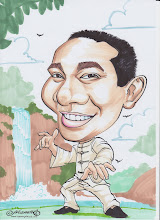
I always wonder and always remind myself there are no end to the levels of skill in martial arts (especially traditional ones) . I recently met Sifu Yap Boh Heong of Goh Chor Kuen (5 ancestor fist) the late great Datuk Chee Kim Thong. We started sharing our ideas and views about martial arts and later went into some live sharing.
My GOD! MY GOD! That encounter has become one of my most memorable moments in martial arts. I am quite confident with my stances but he blew me and threw me around like a rag doll. The only person who could do better is my Sifu (Sifu Yip Fook Choy) and maybe Sifu Yap's father who is Sifu Yap Cheng Hai (whom I've not met yet). It also changed my perception that Goh Chor is hard kungfu.
What I was interested in however was Wu Mei Kung Fu (or Ng Mui Kungfu). Ng Mui as many knows is the person who created White Crane Kungfu and also the person who led to the creation of Wing Chun. Some people say Ng Mui doesn't exist. But I believe otherwise. After looking at the demo, the movements and a bit of the details, I believe that this Ng Mui fist can be the ancestor of Wing Chun. Wing Chun claims to be simple, direct and practical but the style and the movements of Ng Mui fist are even simpler than that of Wing Chun or White Crane.
But simplicity is not usually simple. The amount of details contained within the movements is horrendous (same as Wing Chun). A simple strike forward will have many components but when you somehow have all the components in place the results are instantaneous. For that one moment in time, you will feel invincible.
Traditional Chinese Martial Arts is wonderful! Let's try our best to preserve them!
Showing posts with label martial arts. Show all posts
Showing posts with label martial arts. Show all posts
Saturday, March 26, 2011

Thursday, September 17, 2009
Environmental Training
Where is the most exotic place you have ever practiced? What is the most interesting condition that you have put yourself and your martial arts in?
For me, I’ve practiced in very very heavy rain (Last one was 10 minutes ago... hehehe!), In a snow blizzard, on top of mountains, during earthquakes, inside jungles (the mosquitoes make interesting partners), back alleys (where drug addicts roam), on ships, on small suspension bridges, on steps, beaches (sandy and otherwise) and so many other places and adverse conditions.
It’s one training component some people neglect because they might feel shy, not wanting people to see, want to keep his/her art secret and many many different reasons.
However, it’s the most wonderful and fun way to practice! You get to know about yourself and your art. You get to see yourself in action in different settings. You get to learn what to do in different environment. Your senses become heightened because you might not want people to see what you are doing or you do not want trip over an obstacle. You get to practice using your art while wearing different types of shoes or even barefoot on different ground conditions. You might feel great calm due to the beautiful setting (Mountains and sunsets do that to you). A bit of stress in a dangerous surrounding (practicing at a beach with 2 meter waves did that to me. It is scary because I can’t swim at that time!)
MOST IMPORTANTLY! You get to enjoy your chosen art! Have fun with it and let your creativity rule! When we are having fun we will stick to what we are doing and practice more! That’s the key to becoming good at what we do. Practice more!
So, go grab your swimming trunks (or whatever you find comfortable or uncomfortable) go outside and practice! Grab a partner and go outside this holiday! Enjoy you art! ENJOY YOURSELF!!
For all Muslims, Happy Eid Mubarak! For all that reads this blog, forgive me if my words are harsh, insensitive, useless and not caring. Those with intent are done so we can all go forward and improve ourselves. There might be some that unintentionally hurt somebody’s feelings out there, please forgive me. Do leave a comment and tell if it is so.
Thursday, August 6, 2009
Be Water My Friend!
My good friend and fellow Yip Kin Wing Chun Practitioner Danson Phang recently gave a video of Bruce Lee. The quote was somewhat like this;
"Empty your mind. Be formless, shapeless. Like water. When you put water into a cup, it becomes the cup. When you put water into a bottle, it becomes the bottle. When you put water into a teapot, it becomes the teapot. Water can flow, or it can crash. Be water my friend" Bruce Lee
The big question is "How do we "be water"?". I believe the answer is by understanding and applying the principles of the art we learn. I say this because, water reacts and becomes what it is because of the interaction between its molecules in relation to the stress and pressure put forth by outside forces. So in martial arts, what are the laws that govern it? The answer is, its principles!
For Wing Chun, the principle lies in the interaction of Yin and Yang. For Yip Kin Wing Chun the students are taught of this interaction by learning the forms. The changes within the forms follow the principles of Yin and Yang (i.e. A"Yang" type technique will come after a "Yin" type technique which consequently came from a "Yang" type technique"). After the students understand the relationship and the changes, the continuous change is further drilled using weapons' forms, mok yan jong and a two man form we call "Chi Sau". Students will come to a natural state of change and it comes without thinking.
Taijiquan (especially Chen style Taijiquan) uses the same methods as Yip Kin Wing Chun but their principles and laws are different (well, they are a different martial art and is slightly older than us anyway!). But the basic training principles are the same (empty hand, weapons and later Tui Shou). I see the same principles applied in other Tradional Chinese Martial Arts.
For Hong Kong Wing Chun, the principles are introduced in the form but drilled separately with a partner/(s). The teacher will guide the students through the drills to make sure the students "remember" the principles at muscular level and is able to change at will without thinking.
So understand the basic principles and the LAW that govern or apllied when your martial art was created. Then, YOU CAN BE WATER MY FRIEND!
p/s: If you want to understand more about the basics of becoming water (Wing Chun way), join our 3 days 2 nights training on the 11th to the 13th of September 2009. For details, log on to,
Tuesday, June 30, 2009
Comparing Martial Arts
I'm blessed with visitors and calls who wants to learn and know more about wing chun. There are those who just want to watch. And there are also those who come to compare what they've learned to wing chun. I value all three groups of visitors and/or callers. I believe in a small way, this helps create more awareness to wing chun and to what we're doing. I also hope that small time spent calling or visiting benefits them in some way.
However, all these calls and visits have taught me a big lesson. One that I think is and will be useful to my martial travels and will help me understand others and other arts more. Hope this lesson will also help you when you visit other schools.
1. What number of classes is that class/group at?
We can also ask what level they are at (at that moment) but martial arts curriculums are so vastly different, what they focus at are different depending on their own objectives at the different levels.
I recently have a student of a different martial arts come join my class (trial). I was happy because he had a lot of questions but most of the questions was comparing that very first lesson to the 100th lesson of the art he's learning. My question is, is it fair? In my humble opinion, it is not even fair to compare even the first lesson of two different martial arts because their focus is different. However, if you still want to make a comparison, compare the very first class of your own art to their first, your second class to their second and so on.
However, the first few lessons will show the core of the whole art. Those are the ones I want to see. And lessons taught at the fourth year are usually the most advanced level for the basics of the art.
2. Get YOUR ego out of the equation
If you are visiting, this is the utmost importance. If you cannot do this, don't visit other schools. The ego of yours is better, simpler, faster, stronger, older and all the other "...er"s will block any good information that you can get. Or worse, you'll get into a fight.
Sometimes, the person might have great ego and might offend you and/or your art. First thing is, take a deep breath and relax. Remember, you are there to learn. So, focus on learning. If you can't stand you can always come again another time. Right?
However, if you are open, usually the other party will also be open and share. At least, that's my experience.
3. Ask for opinion
Politely ask for their opinion for certain techniques that you are learning or have learned compared to what they are doing. Key word "POLITELY". Remember, ALL martial arts works. ALL martial arts are great. If not they won't exist in the first place! They might not as effective depending on:
1. the teachers knowledge and/or experience
2. the original reason/principals of its creation has been changed or is not taught
(example: an art created for big battlefield has been changed to sports or vice versa. They might not work because the objectives are different and therefore certain principals needed change, thus effecting the techniques).
3. different conditions
(example: an art created to fight on horses might have a hard time fighting on mud. An art requiring a large area might be a little hard to apply in closed spaces)
Understand your own art's requirements by asking for their opinions and analyzing their answers. Understand the above 3 conditions (the teacher's knowledge and experience, the original reason the art was created, and the conditions that makes it work). Keep your opinions to yourself unless asked.
Lastly, always focus on making friends when you visit. By making friends, we would be able to share more and have a deeper look into the art without actually learning it. But be sincere about it.
However, all these calls and visits have taught me a big lesson. One that I think is and will be useful to my martial travels and will help me understand others and other arts more. Hope this lesson will also help you when you visit other schools.
1. What number of classes is that class/group at?
We can also ask what level they are at (at that moment) but martial arts curriculums are so vastly different, what they focus at are different depending on their own objectives at the different levels.
I recently have a student of a different martial arts come join my class (trial). I was happy because he had a lot of questions but most of the questions was comparing that very first lesson to the 100th lesson of the art he's learning. My question is, is it fair? In my humble opinion, it is not even fair to compare even the first lesson of two different martial arts because their focus is different. However, if you still want to make a comparison, compare the very first class of your own art to their first, your second class to their second and so on.
However, the first few lessons will show the core of the whole art. Those are the ones I want to see. And lessons taught at the fourth year are usually the most advanced level for the basics of the art.
2. Get YOUR ego out of the equation
If you are visiting, this is the utmost importance. If you cannot do this, don't visit other schools. The ego of yours is better, simpler, faster, stronger, older and all the other "...er"s will block any good information that you can get. Or worse, you'll get into a fight.
Sometimes, the person might have great ego and might offend you and/or your art. First thing is, take a deep breath and relax. Remember, you are there to learn. So, focus on learning. If you can't stand you can always come again another time. Right?
However, if you are open, usually the other party will also be open and share. At least, that's my experience.
3. Ask for opinion
Politely ask for their opinion for certain techniques that you are learning or have learned compared to what they are doing. Key word "POLITELY". Remember, ALL martial arts works. ALL martial arts are great. If not they won't exist in the first place! They might not as effective depending on:
1. the teachers knowledge and/or experience
2. the original reason/principals of its creation has been changed or is not taught
(example: an art created for big battlefield has been changed to sports or vice versa. They might not work because the objectives are different and therefore certain principals needed change, thus effecting the techniques).
3. different conditions
(example: an art created to fight on horses might have a hard time fighting on mud. An art requiring a large area might be a little hard to apply in closed spaces)
Understand your own art's requirements by asking for their opinions and analyzing their answers. Understand the above 3 conditions (the teacher's knowledge and experience, the original reason the art was created, and the conditions that makes it work). Keep your opinions to yourself unless asked.
Lastly, always focus on making friends when you visit. By making friends, we would be able to share more and have a deeper look into the art without actually learning it. But be sincere about it.
Friday, June 5, 2009
Friendship is Beautiful
On the second of June, I had the privelage of attending a (to me) historical event. Abot (Mr. Ahmad Nasarudin) of Pertubuhan Gerak Silat Lian Malaysia (you can check their websitewww.pgslm.org) organized a visit to a Gayang Lima class (Pak Atan Air Batu lineage) taught by Tengku Musa (check out gayanglima.blogspot.com). Also in attendance was intructor and students of Gayang Lima (Pak Raja Ali lineage) led by Mr. Sudirman whom we visited 2 weeks before. We would have had a complete Lian representation if Mr. Hisham (Lian PadukanMaster) could come but he was stuck with work. Hope to have you along next time Cikgu!
We started by visiting Grandmaster Dahlan Karim of Seni Silat Setiabakti (checkoutsilatsetiabakti.tripod.com) who is recovering from a mild sickness. Gayang Lima is actually taught at his centre as a collaboration between two masters.
After a brief tea session, we were ushered to the training ground. Students were already training but Tengku Musa was very kind to allow us to watch. The students was practicing their "Lian" or forms as we might call them. They were also doing A LOT of practical applications. Tengku Musa's teaching methods are informal but very detailed. His students are lucky to learn from him.
I've always had much interest and intrigue in the many different styles of Silat Lian and Buah Pukul Mersing. And last night I had the privelage to watch another lineage, up close with detail. I have also seen classes taught by Cikgu Hisham of Lian Padukan and Cikgu Sudirman of Gayang Lima. In terms of technique and footwork, they are all almost exactly like our Yip Kin Wing Chun. In fact, most their techniques resemble those found in our second form (Tai Fa Kuen or Big Flower). And I personally feel Yip Kin Wing Chun has a lot more similarities to Silat Lian and to the older variations of Wing Chun in China than to the Wing Chun in Hong Kong.
The Silat Lian style was brought to Malaysia by Arab traders who came to Malaysia from China in the late 1800s. Yip Kin came to Malaysia in the 1920s and spread his Wing Chun in Malaysia. By looking at the timeline, Lian and Yip Kin Wing Chun might be the older versions of Wing Chun and therefore the similarities. Who knows? And frankly, I advise you not to care though. What's more important is to keep practising and improving whatever it is that you are learning. Only by that way, you'll make your self and your system good.
We ended the session by having a good "teh tarik" session. I was touched looking at the three Lian future grandmasters sitting and talking like they are old friends. They were so engrossed, I couldn't find opening to go into the conversation!!! Well, by being a kungfu guy I was the ODD man out!
Lesson learned was, MAKING FRIENDS IS A LOT MORE FUN AND PRODUCTIVE than letting your ego take over and make enemies. It's also a lot better to have friends who can watch your back than having to look at it your self! (And we can't even see our backs unless we've broken our necks).
I extend my deepest and utmost appreciation to:
1. Mahaguru Dahlan Karim for receiving us at his home and allowing us to visit his training grounds. We wish you a speedy and complete recovery.
2. Cikgu Tengku Musa and his students for receiving us and allowing us to watch their training.
3. Cikgu Sudirman and his students from Gayang Lima (Pak Raja Ali's lineage) for joining us and sharing their valuable time.
4. Cikgu Ahmad Nasarudin (Abot), Cikgu Abdullah and their students from PGSLM for allowing me to tag along.
5. Mr. Fahmi (Lian Padukan student) for letting me hitch a ride.
We started by visiting Grandmaster Dahlan Karim of Seni Silat Setiabakti (checkoutsilatsetiabakti.tripod.com) who is recovering from a mild sickness. Gayang Lima is actually taught at his centre as a collaboration between two masters.
After a brief tea session, we were ushered to the training ground. Students were already training but Tengku Musa was very kind to allow us to watch. The students was practicing their "Lian" or forms as we might call them. They were also doing A LOT of practical applications. Tengku Musa's teaching methods are informal but very detailed. His students are lucky to learn from him.
I've always had much interest and intrigue in the many different styles of Silat Lian and Buah Pukul Mersing. And last night I had the privelage to watch another lineage, up close with detail. I have also seen classes taught by Cikgu Hisham of Lian Padukan and Cikgu Sudirman of Gayang Lima. In terms of technique and footwork, they are all almost exactly like our Yip Kin Wing Chun. In fact, most their techniques resemble those found in our second form (Tai Fa Kuen or Big Flower). And I personally feel Yip Kin Wing Chun has a lot more similarities to Silat Lian and to the older variations of Wing Chun in China than to the Wing Chun in Hong Kong.
The Silat Lian style was brought to Malaysia by Arab traders who came to Malaysia from China in the late 1800s. Yip Kin came to Malaysia in the 1920s and spread his Wing Chun in Malaysia. By looking at the timeline, Lian and Yip Kin Wing Chun might be the older versions of Wing Chun and therefore the similarities. Who knows? And frankly, I advise you not to care though. What's more important is to keep practising and improving whatever it is that you are learning. Only by that way, you'll make your self and your system good.
We ended the session by having a good "teh tarik" session. I was touched looking at the three Lian future grandmasters sitting and talking like they are old friends. They were so engrossed, I couldn't find opening to go into the conversation!!! Well, by being a kungfu guy I was the ODD man out!
Lesson learned was, MAKING FRIENDS IS A LOT MORE FUN AND PRODUCTIVE than letting your ego take over and make enemies. It's also a lot better to have friends who can watch your back than having to look at it your self! (And we can't even see our backs unless we've broken our necks).
I extend my deepest and utmost appreciation to:
1. Mahaguru Dahlan Karim for receiving us at his home and allowing us to visit his training grounds. We wish you a speedy and complete recovery.
2. Cikgu Tengku Musa and his students for receiving us and allowing us to watch their training.
3. Cikgu Sudirman and his students from Gayang Lima (Pak Raja Ali's lineage) for joining us and sharing their valuable time.
4. Cikgu Ahmad Nasarudin (Abot), Cikgu Abdullah and their students from PGSLM for allowing me to tag along.
5. Mr. Fahmi (Lian Padukan student) for letting me hitch a ride.
Friday, April 17, 2009
Treasure your time with your sifu!!!
I just found out that a good friend of my sifu passed away about 4 weeks ago. I know him personally too and I felt a great loss. But his passing is a great loss not just to his family, friends and students, but also to Chinese Martial Arts and Chinese Culture in general.
The late Sifu Lee Wah Kui was the master of Chow Gar Ng Loong Pakua Kuan. Roughly translated it means the Chow Family Ng Loong 8 Triagram Pole (please correct me if I'm wrong). It is a pole form that originated from spear techniques in the Song Dynasty (again correct me if I'm wrong).
I was told that the style comprise of:
5 sets of individual pole forms
1 pole form that combines the elements of the 5 individual pole forms above
2 sets of 2-person pole forms (applications)
2 sets of advanced pole forms
Sifu Lee died just after performing 1 of the 2 sets of advanced pole forms listed above. Unfortunately, it will be last anybody on earth will see the 2 sets of advanced forms as it was so secret it was never taught to anybody. What a big loss that is!
What I'm trying to say is, be loyal to your sifu and spend as much quality time as it is possible with them. Learn as much as you can and share it to the next generation so none will be lost.
The late Sifu Lee Wah Kui was the master of Chow Gar Ng Loong Pakua Kuan. Roughly translated it means the Chow Family Ng Loong 8 Triagram Pole (please correct me if I'm wrong). It is a pole form that originated from spear techniques in the Song Dynasty (again correct me if I'm wrong).
I was told that the style comprise of:
5 sets of individual pole forms
1 pole form that combines the elements of the 5 individual pole forms above
2 sets of 2-person pole forms (applications)
2 sets of advanced pole forms
Sifu Lee died just after performing 1 of the 2 sets of advanced pole forms listed above. Unfortunately, it will be last anybody on earth will see the 2 sets of advanced forms as it was so secret it was never taught to anybody. What a big loss that is!
What I'm trying to say is, be loyal to your sifu and spend as much quality time as it is possible with them. Learn as much as you can and share it to the next generation so none will be lost.
Wednesday, March 18, 2009
Let's share and improve!
I visited a Wing Chun master in Kota Damansara recently. He trained in Wing Chun for years in Australia and Hong Kong. First look I could see he LOVES Wing Chun and it is more evident in his class, from the way he speaks and his actions.
I believe for those who are looking for a sifu, this is the first criteria. PASSION! Second, his/her love for the martial art he's teaching. Third, his/her love for his students. I could see this sifu has all three criteria and sat there anxiously for the class to finish.
At the end of the class we (the sifu, some of his students and me) sat down for a chat on the theories and philosophies of Wing Chun and why it is effective. He also graciously showed the ideas in a practical manner which are easy to understand. The sifu's passion and love for wing chun brought down any wall or ice which is always prevalent when discussions between styles are conducted.
Because of that, we could present our ideas freely without animosity. What did we find out? We have the same ideas even though our styles (even though both are wing chun) look very different from each other. Our approach, however, are very different. And the good sifu graciously invited me to train with him so we could both practice and see what we can learn from each other. An invitation from a great guy like that, who could say no? I just hope I can make him happy with what I have.
Conclusion. Look for the 3 criterias when choosing your sifu for martial arts. Any martial arts. It will help you in learning the art because of the openness and willingness to share attitude that comes with passion,love for the art and love for the students brings.
P/S: Thank you Sifu Kenneth and students of the Crush MMA Gym, Kota Damansara for receiving me.
I believe for those who are looking for a sifu, this is the first criteria. PASSION! Second, his/her love for the martial art he's teaching. Third, his/her love for his students. I could see this sifu has all three criteria and sat there anxiously for the class to finish.
At the end of the class we (the sifu, some of his students and me) sat down for a chat on the theories and philosophies of Wing Chun and why it is effective. He also graciously showed the ideas in a practical manner which are easy to understand. The sifu's passion and love for wing chun brought down any wall or ice which is always prevalent when discussions between styles are conducted.
Because of that, we could present our ideas freely without animosity. What did we find out? We have the same ideas even though our styles (even though both are wing chun) look very different from each other. Our approach, however, are very different. And the good sifu graciously invited me to train with him so we could both practice and see what we can learn from each other. An invitation from a great guy like that, who could say no? I just hope I can make him happy with what I have.
Conclusion. Look for the 3 criterias when choosing your sifu for martial arts. Any martial arts. It will help you in learning the art because of the openness and willingness to share attitude that comes with passion,love for the art and love for the students brings.
P/S: Thank you Sifu Kenneth and students of the Crush MMA Gym, Kota Damansara for receiving me.
Thursday, January 15, 2009
I could use it when I'm 90!
There are many reasons why I'm learning martial arts but there are only a few reasons why I choose Chinese martial arts. One of them is, I know I could use it when I'm 90. Here's why I say so,
My first experience in Chinese Martial Arts is with a Sifu who teaches at the Chee Fee Tai Chi Choy Li Fut association. The sifu looked preety old (maybe about 70 or 80). This is already 18 years ago so I can no longer remember his name. But the experience is etched in my memory and hopefully it will never be removed.
I was learning Choy Li Fut while the master teaches Tai Chi at the side. I asked 1 stupid question which was, "How can you use that in a fight?". The master suggested an exchange which totally changed me. Having both Tae Kwon Do (green belt) and a little bit of Choy Li Fut (I started about a month before that) training and my youth to back me up I was cocky and over confident at the very least!. However, I was stopped and thrown before I could finish and BOY was he FAST! I still remember floating backwards with my soles about 1 feet above ground and landing about 3 or 4 metres away from him! I was beaten by a very old man!
That was not the first time I was so called bullied by and old man. I can no longer remember how many times I've been thrown up side down by my sifu. I've sparred and fought many people of many different martial arts, but none, no matter how big, strong and well conditioned they are, who has thrown me up side down. And my sifu is 66 years old this year with a limp on his leg due to an accident.
I have seen Grandmaster Yip Man's son Yip Chun do Chi Sau with people twice his size and half his age. Relaxed and in control. I have seen my Sibak (sifu's elder kungfu brother) who is 81 this year, pick up the 6 and a half point pole and bully my sihengtai (kungfu brothers) with it.
I can use this when I'm 90. My dream is to have many other 90 year olds practicing with me and continue to improve. Care to join me?
My first experience in Chinese Martial Arts is with a Sifu who teaches at the Chee Fee Tai Chi Choy Li Fut association. The sifu looked preety old (maybe about 70 or 80). This is already 18 years ago so I can no longer remember his name. But the experience is etched in my memory and hopefully it will never be removed.
I was learning Choy Li Fut while the master teaches Tai Chi at the side. I asked 1 stupid question which was, "How can you use that in a fight?". The master suggested an exchange which totally changed me. Having both Tae Kwon Do (green belt) and a little bit of Choy Li Fut (I started about a month before that) training and my youth to back me up I was cocky and over confident at the very least!. However, I was stopped and thrown before I could finish and BOY was he FAST! I still remember floating backwards with my soles about 1 feet above ground and landing about 3 or 4 metres away from him! I was beaten by a very old man!
That was not the first time I was so called bullied by and old man. I can no longer remember how many times I've been thrown up side down by my sifu. I've sparred and fought many people of many different martial arts, but none, no matter how big, strong and well conditioned they are, who has thrown me up side down. And my sifu is 66 years old this year with a limp on his leg due to an accident.
I have seen Grandmaster Yip Man's son Yip Chun do Chi Sau with people twice his size and half his age. Relaxed and in control. I have seen my Sibak (sifu's elder kungfu brother) who is 81 this year, pick up the 6 and a half point pole and bully my sihengtai (kungfu brothers) with it.
I can use this when I'm 90. My dream is to have many other 90 year olds practicing with me and continue to improve. Care to join me?
Subscribe to:
Posts (Atom)